You can prevent
Jasmine
cervical cancer
by keeping up
with screenings



Why get screened for cervical cancer?
Cervical cancer is among the easiest cancers to prevent and is also highly curable when found and treated early. While HPV vaccination can help prevent cervical cancer, regular screening can catch it early. The U.S. Preventive Services Task Force recommends a tiered screening approach for people with a cervix based on age:
- For those 21–29 years, a Pap test every 3 years. A Pap test looks for precancerous or cancerous cells on the cervix.
- For those 30–65 years, a Pap test every 3 years OR a high-risk HPV test every 5 years OR co-testing with Pap and high-risk HPV every 5 years.
Get help scheduling your cervical screening
Five minutes of awkward could save your life.
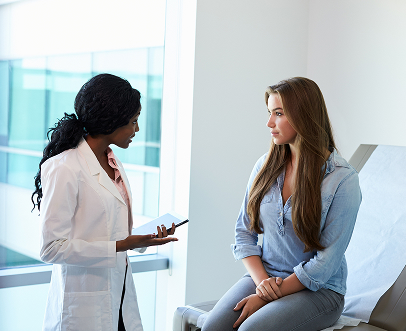
Two exams can be done to screen for cervical cancer, and your doctor will identify the one that is right for you based on your age and cancer risk. In either exam, the Pap test or the HPV test, a clinician will use a tool called a speculum to create a better view of the cervix. They’ll use a small wand or swab to collect cells from the surface of the cervix and place those cells in a vial to be sent to a lab for testing.
A Pap test looks for pre-cancerous cells, while an HPV test can detect high-risk HPV DNA in the cells. Often, the tests can be combined into a co-test.
Self-collection is a newer option for cervical cancer screening that allows you to collect your own vaginal sample for HPV testing during a healthcare visit and in some cases, at home. It may be an option for those at average risk with no symptoms and can make testing more comfortable for some. Ask your healthcare provider if self-collection is available and check with your insurance to see if it’s covered.
Who is at risk of cervical cancer?
Anyone with a cervix is at risk for cervical cancer. It occurs most often after age 30. The human papillomavirus (HPV) is the main cause of cervical cancer. HPV is a common virus that is passed from one person to another during sexual contact. Most of the time, there are no symptoms, and HPV infections will resolve on their own. Some HPV types can linger, leading to cervical and other cancers.
How to reduce your risk of cervical cancer
- If you are younger than 26, get the HPV vaccine. Learn more about HPV vaccination.
- See your doctor regularly for a Pap and/or HPV test.
- Follow up with your doctor if your cervical cancer screening test results are not normal.
- Don’t smoke.
- Use condoms during sex.*
*HPV infection can occur in both male and female genital areas and the oral cavity that are covered or protected by a latex condom, as well as in areas that are not covered. While the effect of condoms in preventing HPV infection is unknown, condom use has been associated with a lower rate of cervical cancer.
Cervical cancer facts
Each year, approximately 12,000 women in the United States get cervical cancer.
When caught early, before it can spread, cervical cancer has a 91% survival rate.
There are 13 types of HPV, and the vaccine Gardasil 9 protects against 9 of those HPV strains that pose the highest risk for cancer, greatly reducing the incidence of cervical cancer among vaccinated individuals.
Free and Low-Cost Cervical Cancer Screening
No insurance? Underinsured? No problem. Several programs in Nevada provide free cervical cancer screening to those who are uninsured, cannot afford screening, and may not qualify for Medicare or Medicaid coverage.
Do you prefer one-on-one help getting your cervical cancer screening? Contact Nevada Cancer Coalition’s ThriveNV support team by calling 775-451-1670 ext 106. Or complete this form.