A new option for cervical cancer screening: What at-home self-collection means for Nevada
12 December, 2025
SHARE


Cervical cancer screening in the U.S. is entering a new era with the FDA’s recent approval of the Teal Wand, the first at-home self-collection device for primary human papillomavirus (HPV) testing. This development expands access to a screening option that uses the same highly accurate HPV testing recommended in clinical guidelines, while allowing people to collect samples at home and mail them to a lab for analysis.
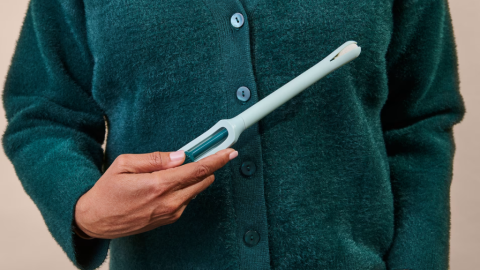
The self-collection device is designed to be simple and private, giving cervical cancer an at-home screening just as has been available for years for colorectal cancer. Users receive a prescription and kit through a telehealth consultation, insert the handheld device into the vagina to collect a sample, and send that sample to a certified laboratory for testing. The specimens are processed using cobas HPV testing, the same test widely used in clinician-collected screenings.
Clinical validation through the SELF-CERV study shows that self-collected samples have equivalent performance to those collected in a provider’s office, detecting cervical precancer about 96% of the time.
Regular screening for HPV — the virus responsible for the vast majority of cervical cancers — is central to prevention. Cervical cancer is one of the most preventable cancers when detected early—and even more preventable when individuals complete HPV vaccination during adolescence—yet many people remain behind on recommended screening schedules because of barriers such as lack of transportation, work and caregiving responsibilities, discomfort with clinic exams, or lack of a nearby provider. In Nevada, cervical cancer screening rates are the highest of any recommended cancer screening, but late stage diagnoses remain high. More than 58% of cervical cancers in Nevada are found at a later stage.
The new at-home option can help address these barriers by offering a way to complete screening without an in-office visit. The Teal test isn't yet available in Nevada, as of December 2025, but has rolled out to California, New York, and Florida with more states said to be added soon. Teal Health has yet to respond to a request for more information on a potential Nevada launch date.
Potential to Reduce Disparities
Public health experts have long recognized that cervical cancer disproportionately affects individuals with limited access to care. Populations in rural areas, people with lower incomes, and those who face systemic barriers to health services often have lower screening rates and higher risks of advanced disease. An at-home test option may help narrow these gaps by meeting people where they are — literally in their homes — and minimizing traditional access hurdles. A majority of participants in the key SELF-CERV study reported they would be more likely to stay up to date with screening if they could do it at home, and most preferred self-collection to clinic-based sampling.
An earlier study by researchers in Boston found self-collected HPV swabs were preferred by trans-masculine persons, who said the tests were “less invasive, provoke less gender discordance, and promote a greater sense of agency compared to Pap tests.” These individuals, along with others who are part of the LGBTQ+ community and have a cervix, are a group who face disparities in cancer prevention, early detection, treatment, and survivorship care.
By complementing existing efforts such as community outreach, mobile screening events, and clinic-based services, at-home self-collection could make cervical cancer prevention more equitable for Nevada communities that struggle with transportation, provider shortages, or cultural and linguistic barriers to care.
What Doctors and Researchers Are Saying
Physicians involved in the research and review process emphasize both the promise and responsibility of this new tool. The SELF-CERV study — the largest comparative study of self-collection in the U.S. — confirmed that the Teal Wand produces results comparable to clinician-collected samples across a diverse participant group. Participants also expressed strong preference for the at-home experience.
Clinicians note that while self-collection broadens access to screening, the continuum of care remains important. A positive HPV result does not mean a person has cancer, but rather that follow-up with a health professional for diagnostic evaluation is needed. Ensuring that patients have clear pathways to follow-up care will be critical to realizing the full benefit of any screening model.
Looking Ahead in Nevada
The rollout of the Teal Wand began in 2025, with plans to expand availability nationwide and partnerships with major insurers to improve affordability. As more Nevadans consider at-home screening, health care providers and community organizations can help ensure that people understand how to use the test, interpret results, and connect with follow-up care when necessary.
At-home self-collection is not meant to replace all traditional cervical cancer screening but to add a valuable tool that meets people where they are. When combined with HPV vaccination, regular screening, and timely follow-up, it represents another step forward in the decades-long effort to reduce cervical cancer incidence and mortality.
American Cancer Society suggests new cervical screening guidelines
The American Cancer Society (ACS) recently released an update to its cervical cancer screening guideline, published in CA: A Cancer Journal for Clinicians. This update expands the society’s previous recommendations for average-risk individuals with a cervix to include self-collected vaginal specimens for HPV testing. While ACS maintains that clinician-collected cervical samples remain the preferred method for HPV testing, the guideline now endorses self-collection as an acceptable alternative for those aged 25–65 years, especially where access to in-clinic screening is limited.
For individuals who choose self-collection, the ACS recommends a three-year interval between tests following a negative HPV result, which differs from the five-year interval recommended for clinician-collected primary HPV testing. Follow-up with a clinician remains necessary if a self-collected test is HPV positive.
The guideline update also provides revised criteria for exiting cervical cancer screening. To discontinue routine screening at age 65, average-risk individuals should have documented negative primary HPV results — either from clinician-collected specimens, acceptable co-testing (HPV with cytology), or, when these are not available, three consecutive negative Pap tests with the last performed at age 65. These changes are intended to ensure safe discontinuation of screening while still capturing late-onset disease in populations where adherence to prior guidelines has been inconsistent.
Overall, the updated recommendations reflect advances in evidence and technology — including regulatory approval of self-collection methods — and underscore efforts to improve screening uptake and equity. By legitimizing self-collected HPV testing and clarifying exit strategies, the ACS aims to reduce ongoing disparities in cervical cancer incidence and mortality, particularly among under-screened and underserved communities.
The 2018 U.S. Preventive Services Task Force (USPSTF) screening recommendation for cervical cancer screening remains the leading guideline for most insurers. The guideline has been in a review and update process since 2021 and includes an evidence review of self-collected HPV samples. The review finds self-collected samples “can have similar test accuracy for pre-cancer compared to clinician-collected cervical hrHPV samples and can increase receipt of cervical cancer screening.”
There is no expected date for release of an updated USPSTF cervical cancer guideline.
You May Also Like
HPV Vaccination Provider Toolkits - Updated in 2026
03.27.2026
Nevada Cancer Coalition developed two toolkits to help Nevada healthcare providers increase the number of youth who initiate and complete the HPV
April Cancer Awareness Materials: Head & Neck and Testicular Cancers
03.25.2026
April is the awareness month for both Head & Neck cancers and Testicular cancer.

Nevada Cancer Coalition reaffirms support for multi-dose HPV vaccination schedule
02.13.2026
On Jan. 5, 2026, the Deputy Secretary of the U.S. Department of Health and Human Services accepted a major revision to the standing U.S.