Small ask, big impact: Bringing the medical community into radon outreach
11 November, 2026
SHARE


Guest post by Chris Kelly,
Senior Program Coordinator, Nevada Radon Education Program
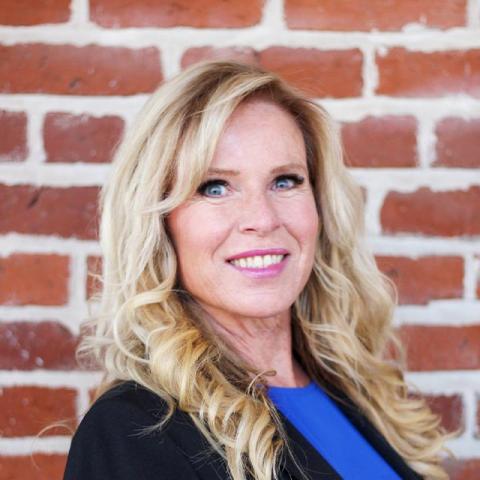
The idea began with a simple question to my husband, a physician: “Do you talk to your patients about radon?” He said no. When I asked other physicians, I heard the same answer.
Those conversations showed me that effective outreach does not always begin with a large budget, a new grant, or a statewide campaign. Sometimes, it begins with one simple question.
That was the message I shared at the 2026 Indoor Environments Radon and Vapor Intrusion Symposium in Norfolk, Virginia, where I presented “Small Ask. Big Impact. Through Your Medical Community.”
Looking Beyond Our Usual Audiences
As program manager for the Nevada Radon Education Program at the University of Nevada, Reno, I face a challenge shared by radon programs across the country: limited staff, tight budgets, and slow growth in voluntary testing.
The question for me became: How do we reach more people and move them to act?
Real estate outreach remains vital. But I began thinking about another group that talks with people about health every day: physicians.
Physicians are trusted messengers with regular patient contact. Rather than asking them to become radon experts, I presented radon as an environmental health hazard and the leading cause of lung cancer among nonsmokers—making it clearly relevant to patient care.
The strategy centered on three simple asks:
- Test your own home for radon.
- Add radon to patient intake forms.
- Help distribute radon test kits.
The goal was to give medical professionals practical ways to help without asking them to become experts in radon measurement or mitigation.
Small Actions, Real Results
An opportunity to speak to approximately 195 physicians through the Congress of Integrative Medicine gave me a chance to put this idea to the test. What happened afterward mattered far more than the size of the audience.
Following the presentation, we saw immediate commitments to action:
- 40 physicians committed to testing their own homes.
- 30 physicians pledged to modify their patient intake forms.
- Dozens of provider guides were distributed and put into practice.
These results changed how I think about measuring success. We often count how many people attend a presentation or take a brochure. Those numbers are useful, but the better question is: What did people do after they heard our message?
Testing a home for radon is an action. A test kit placed in someone’s hands is an action. A radon question added to an intake form creates an opportunity for a life-saving conversation.
In Nevada, this outreach even led a highly respected physician with 50 years of practice to volunteer his clinic as a radon test-kit pickup location during National Radon Action Month. When a radon question becomes part of routine medical care, awareness no longer depends entirely on a brochure, billboard, or annual campaign.
Scaling the Idea: Making It Easy to Say "Yes"
This Nevada experience became the foundation of my presentation at the Norfolk Symposium. I did not want to simply tell other radon programs, “You should work with physicians.” I wanted to show that programs of any size can begin medical outreach with one practical step.

You do not need a national medical conference to get started. State and local programs can begin by identifying healthcare partners already serving their communities, including:
- Local medical associations
- Pulmonology and oncology groups
- State and regional cancer coalitions
When speaking with healthcare professionals, keep the message tailored to the audience. Focus on patient safety, lung cancer prevention, and environmental history rather than unnecessary technical details.
Most importantly, make it easy to help. Sample intake questions, easy-to-follow testing instructions, and a resource for finding certified radon professionals turn “This is important” into “I can do this today.”
Recognizing the Barriers
This approach isn't without challenges. Physicians do not always control their own intake forms, particularly within larger healthcare systems. Approval processes can slow down changes, and enthusiasm doesn't always equal the authority to act.
That is why it helps to start small and local. One committed champion can open the door to new partnerships. By nurturing that relationship and tracking testing activity, programs can build broader connections with individual physicians and groups such as cancer coalitions.
The Bigger Lesson
The ultimate takeaway for the Norfolk audience wasn't just about targeting doctors. It was about the power of trusted messengers.
Healthcare professionals are already having daily conversations about health risks and prevention. By giving them clear information and practical tools, we turn passive awareness into direct action.
At the end of my presentation, I challenged the radon leaders in the room to look at their own programs:
- What new audience could you engage?
- What small collaboration could you support?
- What first step could you take today?
Our effort in Nevada didn't begin with a massive budget or a statewide mandate. It began with a relationship, a trusted messenger, and a simple ask. Sometimes, that is all it takes to make a meaningful difference.
Chris Kelly
Senior Program Coordinator
Nevada Radon Education Program
University of Nevada, Reno
4955 Energy Way Reno, NV 89502
775.336.0252
Preferred method of contact: Chrisk@unr.edu
You May Also Like
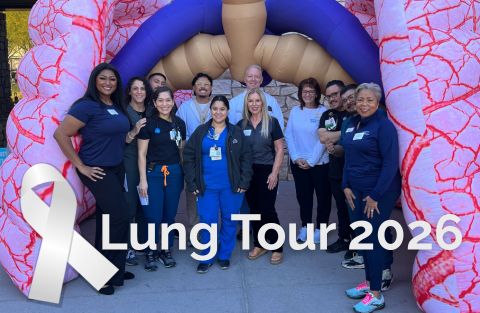
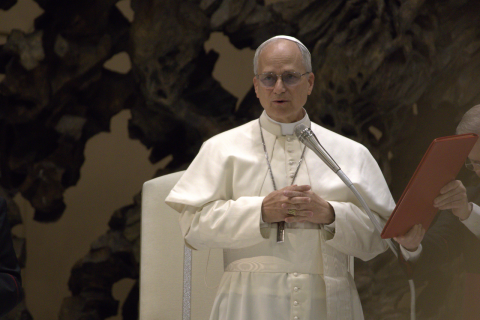
Pope Leo XIV’s lung cancer highlights growing number of nonsmokers diagnosed with the disease – and younger people too
10.14.2026
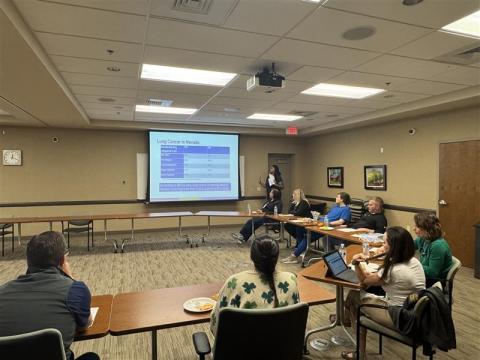
Make lung cancer screening a stronger part of your practice with free, personalized support
10.07.2026
Identifying eligible patients, making referrals and helping people overcome barriers to lung cancer screening takes coordination.